Source Miniature Thread Holes Load Cell for Body Scales
Find 29 miniature thread holes load cell options for body scales, personal weighing systems, and industrial integration. Compare analog sensor specs, strain gage accuracy, and metal construction details from China-based manufacturers to select the right component for your design; compare the available evidence and request quotations based on your requirements.
Key considerations
Products List


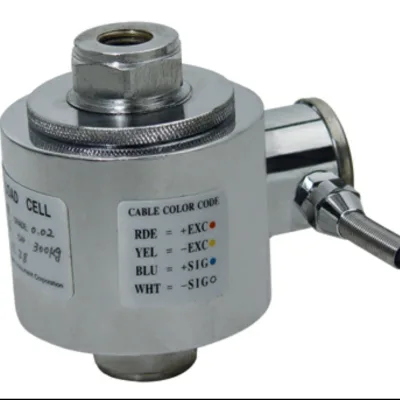


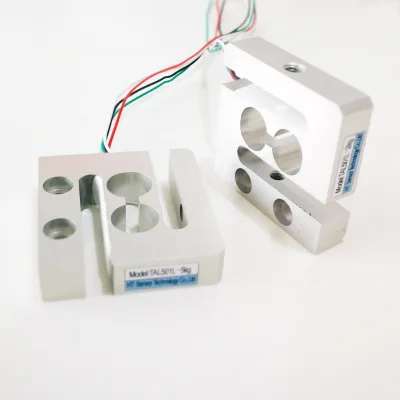
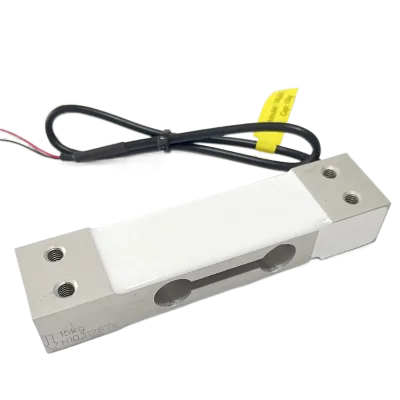

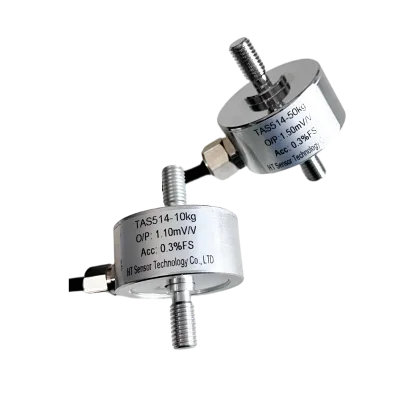
Comprehensive Sourcing Guide
Miniature Thread Holes Load Cell Sourcing Guide
The miniature thread holes load cell serves as a critical transducer for compact weighing systems where space is at a premium. These devices typically utilize resistance strain technology to convert mechanical force into an analog electrical signal, making them ideal for integration into body scales and personal weighing systems. Buyers must recognize that while the core function remains consistent, the physical form factor and mounting capabilities vary significantly across different model numbers like the CZL913E or CZL928E.
Procurement decisions should prioritize the specific output signal requirements of the target application. Most observed units provide an analog output of 2 mV/V, which requires compatible signal conditioning hardware to function correctly. Sourcing agents must verify that the selected component matches the system's voltage and current constraints, ensuring that the 4-wire configuration aligns with the existing wiring architecture of the final product assembly.
Product Scope and Observed Listing Signals
The market for miniature thread holes load cells presents a diverse range of models, each defined by distinct dimensional profiles and capacity limits. Listings indicate capacities ranging from 0.5 kg up to 100 kg, with specific models offering precise dimensions such as 29.7x36.5x11.4 mm or 80x12.7x12.7 mm. Buyers should carefully cross-reference these physical specifications against their enclosure designs to ensure a proper fit without requiring extensive mechanical redesigns of the host device.
Signal characteristics and material composition are equally vital when evaluating product scope. The majority of available units are constructed from metal to ensure durability and corrosion resistance, a feature essential for applications involving body weighing or personal scales. Additionally, the output signal type is consistently analog, with sensitivity values often cited around 1.0±0.15 mV/V, requiring buyers to confirm these electrical parameters match their data acquisition systems before finalizing any purchase order.
Technical Specifications to Verify
Accuracy and repeatability are paramount when selecting a miniature load cell for precision applications. Verified data suggests that high-performance units can achieve an accuracy of 0.05% Full Scale, with repeatability maintained within ±0.05% of the full scale reading. Procurement teams must request specific test reports for these metrics, as these values directly impact the reliability of the final weighing system and the trustworthiness of the data it generates for end-users.
Environmental resilience and operational temperature ranges define the longevity of the component in real-world conditions. Units are often rated for service temperatures between 0°C and +40°C, with storage capabilities extending from -10°C to +60°C. Buyers must verify that the selected model's IP rating and cable specifications, such as the 0.8x470 mm wire dimensions, meet the environmental exposure requirements of the intended installation site to prevent premature failure due to moisture or thermal stress.
Compliance and Safety Documentation
Certification status is a primary indicator of a supplier's commitment to quality and regulatory adherence. Many observed products carry ISO certifications, and some listings explicitly mention CE compliance, which is often required for electronic equipment sold in European markets. Buyers should demand valid certification documents for each batch, ensuring that the specific model number matches the certified scope and that the documentation is current and issued by an accredited body.
Safety and material standards further dictate the suitability of the load cell for commercial deployment. While some specifications list standards as "DEPENDS," others reference ISO9001:2008, indicating a structured quality management system. It is essential to verify that the production process, described as integration in some contexts, adheres to these standards. Procurement teams must ensure that all safety documentation covers the specific application, particularly for devices used in personal weighing systems where user safety is a direct concern.
Cost Drivers and Commercial Terms
Pricing for miniature thread holes load cells varies widely, with observed ranges spanning from 1 to 350 USD depending on the model and customization level. Factors influencing cost include the specific capacity, the precision of the strain gauge, and whether the unit requires custom modifications. Buyers should analyze the total cost of ownership rather than just the unit price, considering that higher accuracy models or those with specialized IP ratings may command a premium but offer better long-term value.
Minimum Order Quantities (MOQ) and lead times are critical commercial terms that affect supply chain planning. The observed MOQ range extends from 1 to 1000 units, offering flexibility for prototyping or small-batch production. However, larger orders often unlock better pricing tiers. Procurement managers must negotiate clear terms regarding lead times and payment schedules, ensuring that the supplier can meet production deadlines without compromising on the quality of the integrated strain gauge components.
Supplier Qualification and Quality Control
Supplier location and production origin play a significant role in logistics and quality assurance. Many manufacturers are based in China, with specific origins noted in Dongguan and Shaanxi, regions known for their manufacturing capabilities. Buyers should assess the logistical advantages of these locations against potential shipping delays or import duties. Verifying the supplier's ability to maintain consistent quality across different batches is essential, especially when sourcing from multiple facilities within the same region.
Quality control processes must be rigorously evaluated to ensure product consistency. The production process often involves integration, which requires precise assembly techniques to maintain the structural integrity of the metal housing and the strain gauge. Buyers should inquire about the supplier's internal testing protocols, including checks for deflection at maximum capacity, which should remain below 0.5 mm. Establishing a clear quality agreement that defines acceptable defect rates and inspection procedures is vital for maintaining product reliability.
Long-Term Procurement Checks
Sustainability and supply chain resilience are key considerations for long-term procurement strategies. Buyers should verify the availability of spare parts and the supplier's ability to maintain production continuity over extended periods. Given that some models have specific dimensions and cable lengths, ensuring that these specifications remain constant is crucial for the maintenance of existing products. A stable supply chain prevents costly redesigns and ensures that replacement units are functionally identical to the original components.
Future-proofing the procurement strategy involves monitoring technological advancements and standard updates. As industry standards evolve, suppliers must adapt their products to meet new requirements, such as updated CE or ISO standards. Buyers should establish a relationship with suppliers who demonstrate a commitment to continuous improvement and innovation. Regularly reviewing the performance of the load cells in the field and comparing them against initial specifications will help identify any drift in quality or performance that requires immediate corrective action.
FAQs
What is the accuracy of miniature thread holes load cells?
The accuracy is 0.05%Fs. This high precision ensures reliable measurements for body scales and personal weighing systems. The strain gage theory and resistance strain transform type contribute to consistent performance. These sensors are designed for applications requiring exact weight data in compact form factors.
Can these load cells be customized for specific needs?
Yes, customization is available for many models. Some variants are explicitly marked as customized, while others are non-customized. Buyers can select from different output signals and IP ratings. This flexibility allows integration into various body weighing systems and industrial applications requiring specific dimensional or electrical constraints.
Which certifications do these miniature load cells hold?
These products hold ISO and CE certifications. Some models also comply with ISO9001: 2008 standards. These certifications indicate adherence to quality management and safety regulations. Buyers can trust the manufacturing processes in China, including facilities in Dongguan and Shaanxi, for producing reliable and compliant weighing components.
What is the output signal type for these sensors?
The output signal type is analog. Specifically, the output is 2 Mv/V. This analog type signal is standard for strain gage sensors. It allows for easy integration with existing weighing system electronics. The 4-wire configuration ensures stable signal transmission for accurate weight measurement in various industrial and commercial applications.
What is the maximum capacity range for these load cells?
The maximum capacity ranges from 0.5 to 100 Kg. One specific model has a capacity of 11lb. This range suits various body scales and personal weighing systems. The deflection at maximum capacity is less than 0.5mm, ensuring durability. Buyers can select the appropriate capacity based on their specific weighing requirements and load expectations.
How are these miniature load cells packaged for shipping?
Packaging varies by model. Some are packed in cartons, while others use cartons in fibre bags. One variant is packed in a carton in a woven bag, and another in an original paper box. This diverse packaging ensures protection during transit. Buyers should verify the specific packing method for their ordered model to ensure safe delivery.